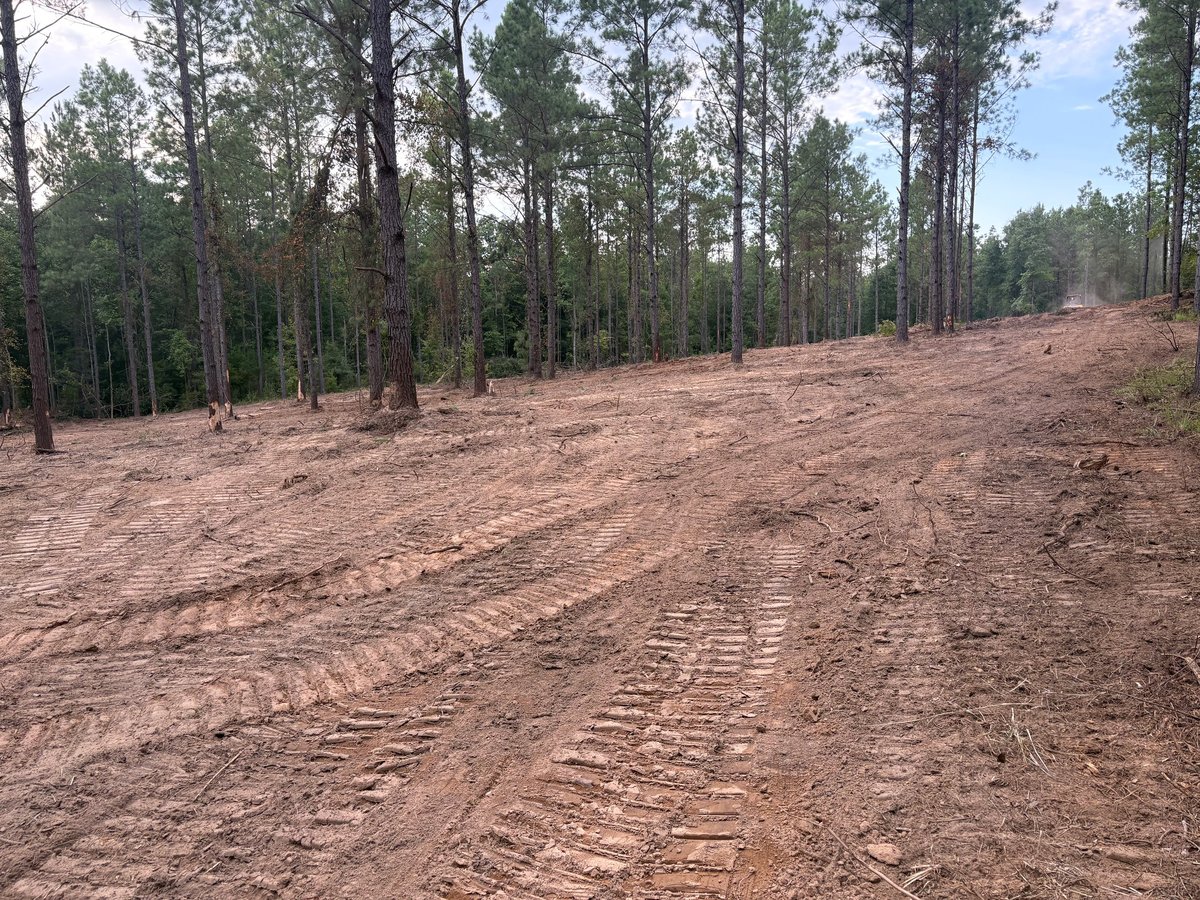
See how CALS opened an underutilized pine stand and prepared approximately four acres for high-quality deer and turkey forage.
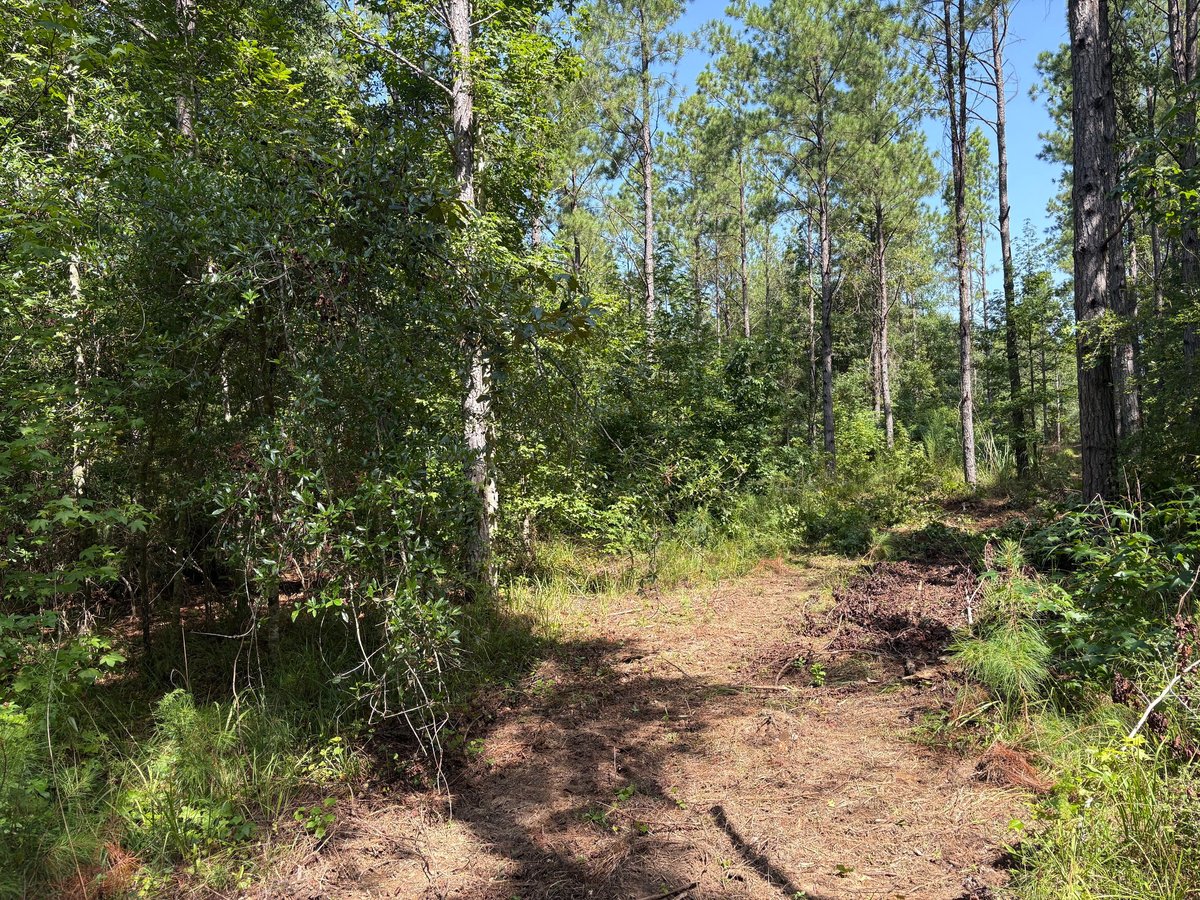
At the start of this project, the existing pine stand was overgrown with dense understory vegetation that occupied much of the available ground-level space. Sweetgum, water oak, and other competing woody species had filled in below the canopy.
The density limited usable open ground and kept the area from serving the landowner's intended wildlife-management purpose. Rather than a clean, open forest floor where forage could be established, this stand was thick with material that crowded out the possibility of usable ground.
The challenge: quality ground was locked up inside a heavily understoried stand — not because the timber was lost, but because the understory prevented the area from being used.
The objective was not simply to remove vegetation. The goal was to open approximately four acres of ground suitable for the future establishment of high-quality deer and turkey forage — while retaining the desirable pine overstory and integrating the opening into the surrounding property. For this landowner, the project fit within a broader hunting-property improvement effort: taking an underutilized portion of the stand and putting it back to work as a part of an overall wildlife-management strategy.
In practice, that meant opening roughly four acres of usable open ground for future forage, keeping the desirable pine overstory that gives the stand its character, and tying the new opening into the surrounding wildlife-management plan rather than treating it as an isolated cut.
Selective, purposeful work — not maximum vegetation removal.
CALS selected equipment and methods based on the vegetation, terrain, and landowner's management objective.
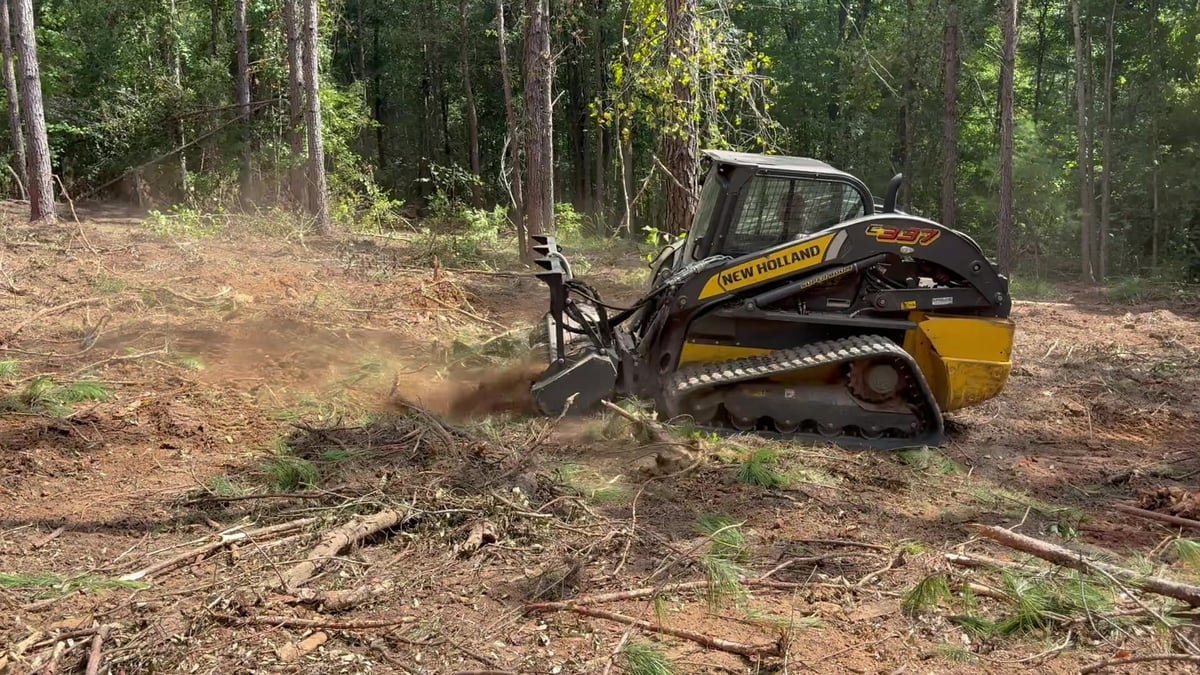
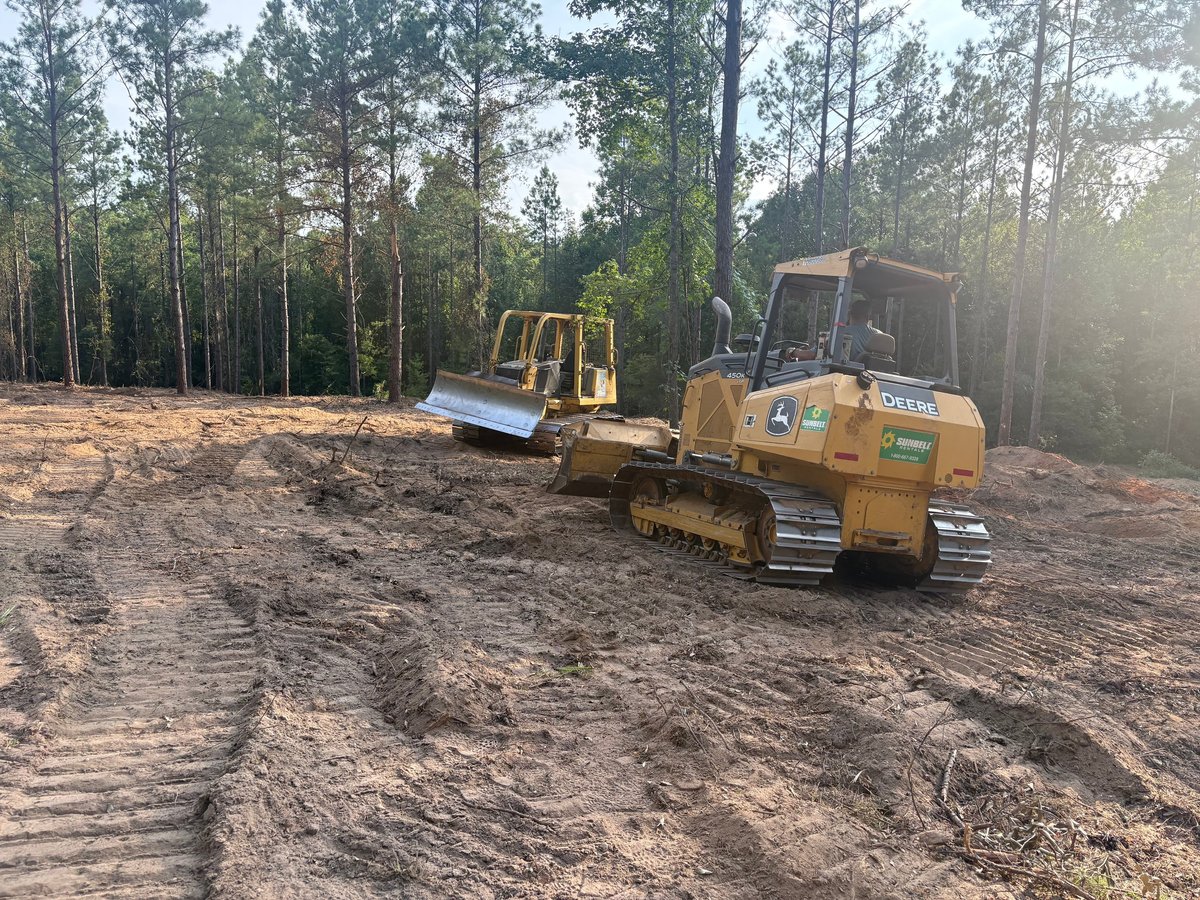
A skid steer with a mulching attachment worked through dense understory and smaller woody vegetation. Dozers handled heavier material and site preparation where conditions required greater pushing and grading capability.
Using different equipment for different stages allowed the work to remain focused on the objective: opening approximately four acres while retaining the desirable pine overstory and preparing the ground for forage establishment.
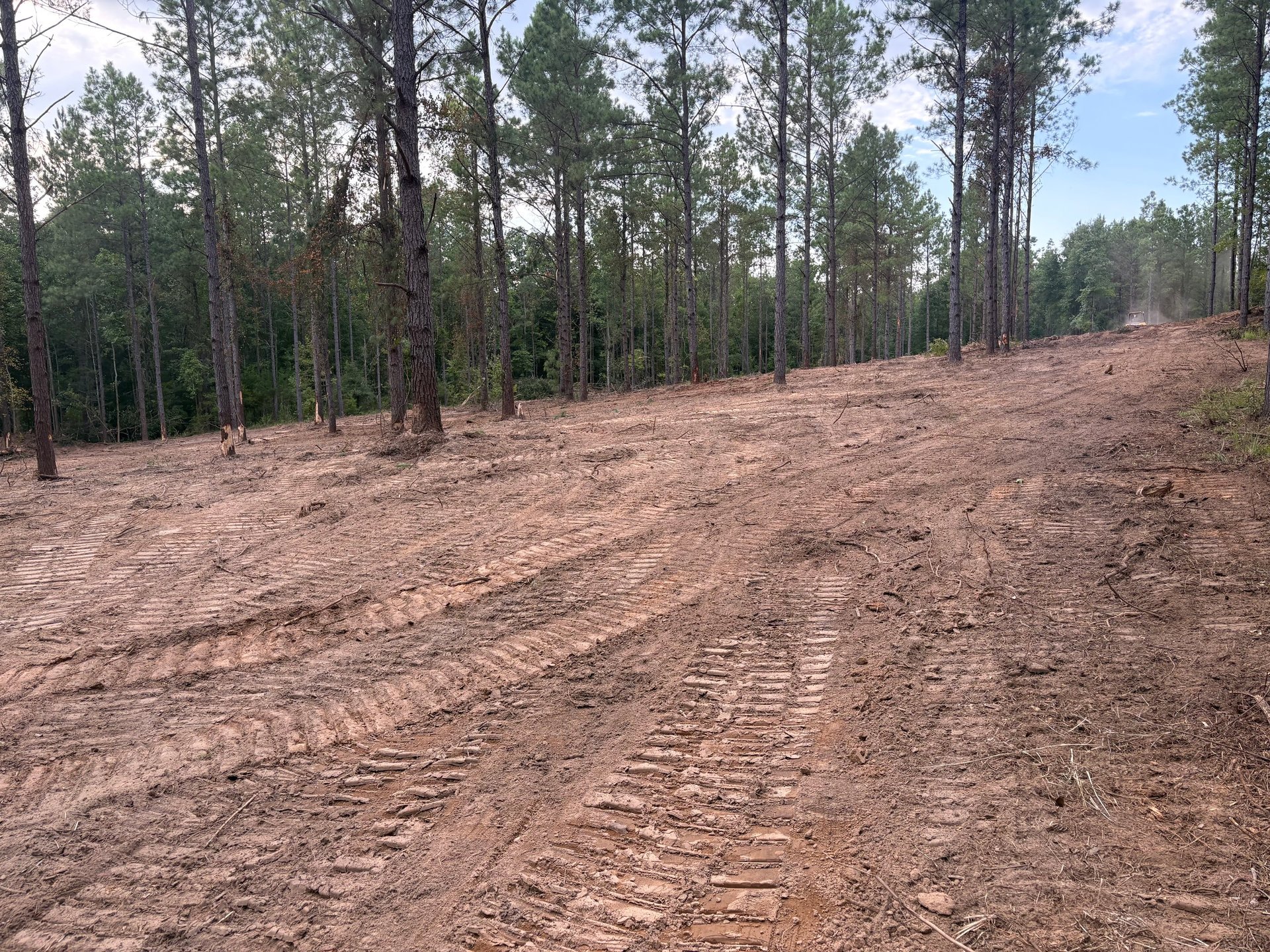
The same stand and retained pine overstory, documented as the project progressed.
Dense sweetgum, water oak, and competing understory filling the ground level.
Understory removed and usable ground emerging, pines held intact.
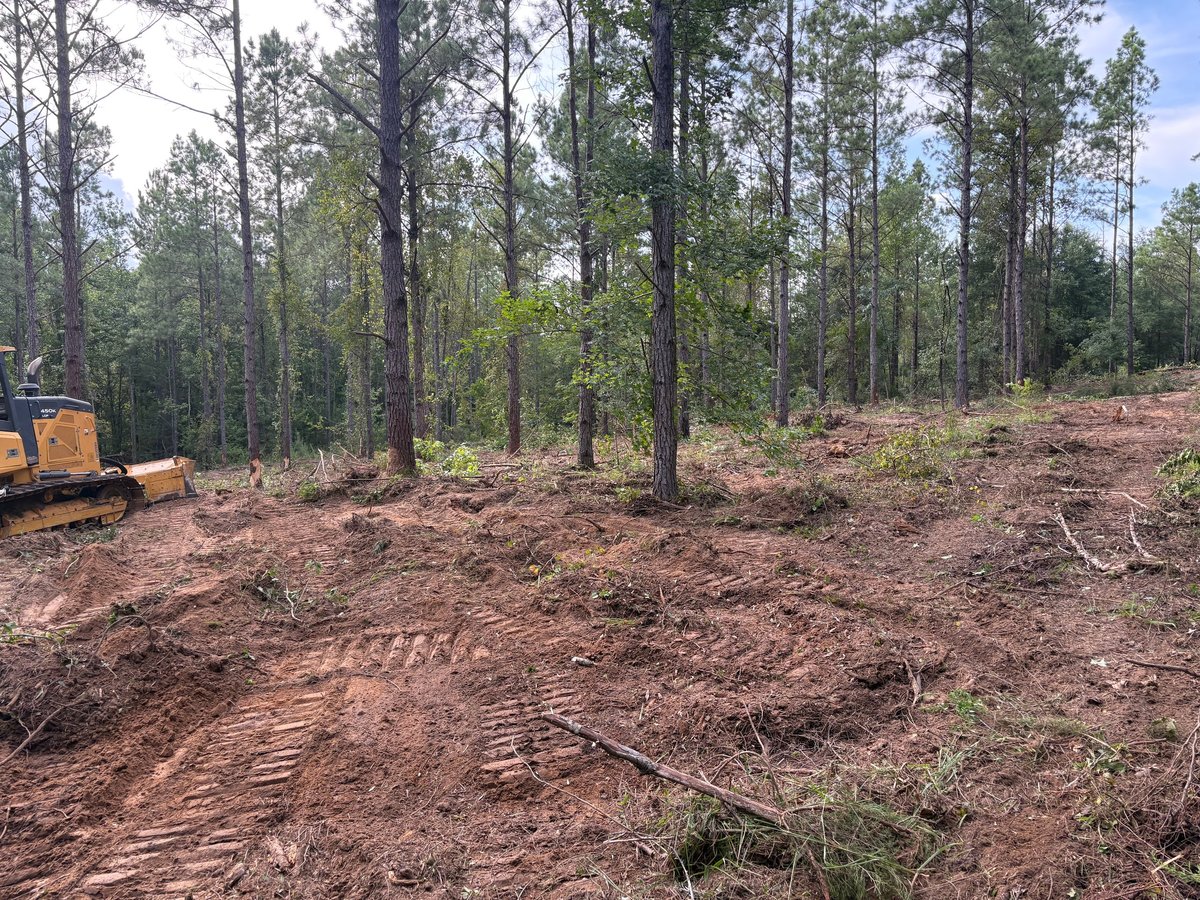
Approximately four acres opened and prepared for future forage establishment.
Approximately four acres that were heavily occupied by understory vegetation are now opened and prepared for the next stage of the project. The desirable pine overstory was retained while the ground was opened and prepared for forage establishment. The site is not yet a completed food plot — planting and establishment come next.
The prepared opening is ready for the next stage of the landowner's wildlife-management plan.
An authentic project photograph will be added here after forage establishment.
If you have overgrown areas, underutilized timber ground, old openings, or existing food plots you want to expand, CALS can help turn your land-management goals into a practical plan.
Talk With CALS About Your Property